 AI Agent ROI Calculator
 Free training: Chatbot crash course
 Whitepaper: The acceptance of chatbots
Choosing the right voicebot determines the success of your customer automation. Do you want to increase availability and relieve your call center, but don't know which technology to use?
This article highlights the strategic difference between rule-based voicebots andautonomous AI voicebots. Find out how a hybrid approach offers the best of both worlds and when it can be used.
Autonomous or rule-based voicebots: which solution is right for you?
The telephone hotline is often the first and most important point of contact between your company and your customers. However, with increasing call volumes and the desire for 24/7 availability, traditional call centers are reaching their limits, resulting in long waiting times, frustrated customers and overworked employees.
This is exactly where modern conversational AI solutions such as voicebots which relieve the burden on customer service by automating routine requests.
But not all voicebots are the same. Companies are faced with a strategic decision: should they rely on the proven stability of rule-based voicebots or use the dynamic flexibility of the latest generation of autonomousvoicebots?
Choosing the right type of voicebot is crucial to the success of your automation strategy and has a significant impact on efficiency, customer satisfaction and ultimately costs.
While rule-based systems are ideal for clear, predefined processes such as structured data queries, they quickly reach their limits when it comes to free speech and complex, context-dependent conversations. Autonomous voicebots based on large language models promise a major leap in call quality and resolution rate here, but are still not 100% predictable.
Rule-based voicebots for efficient routines
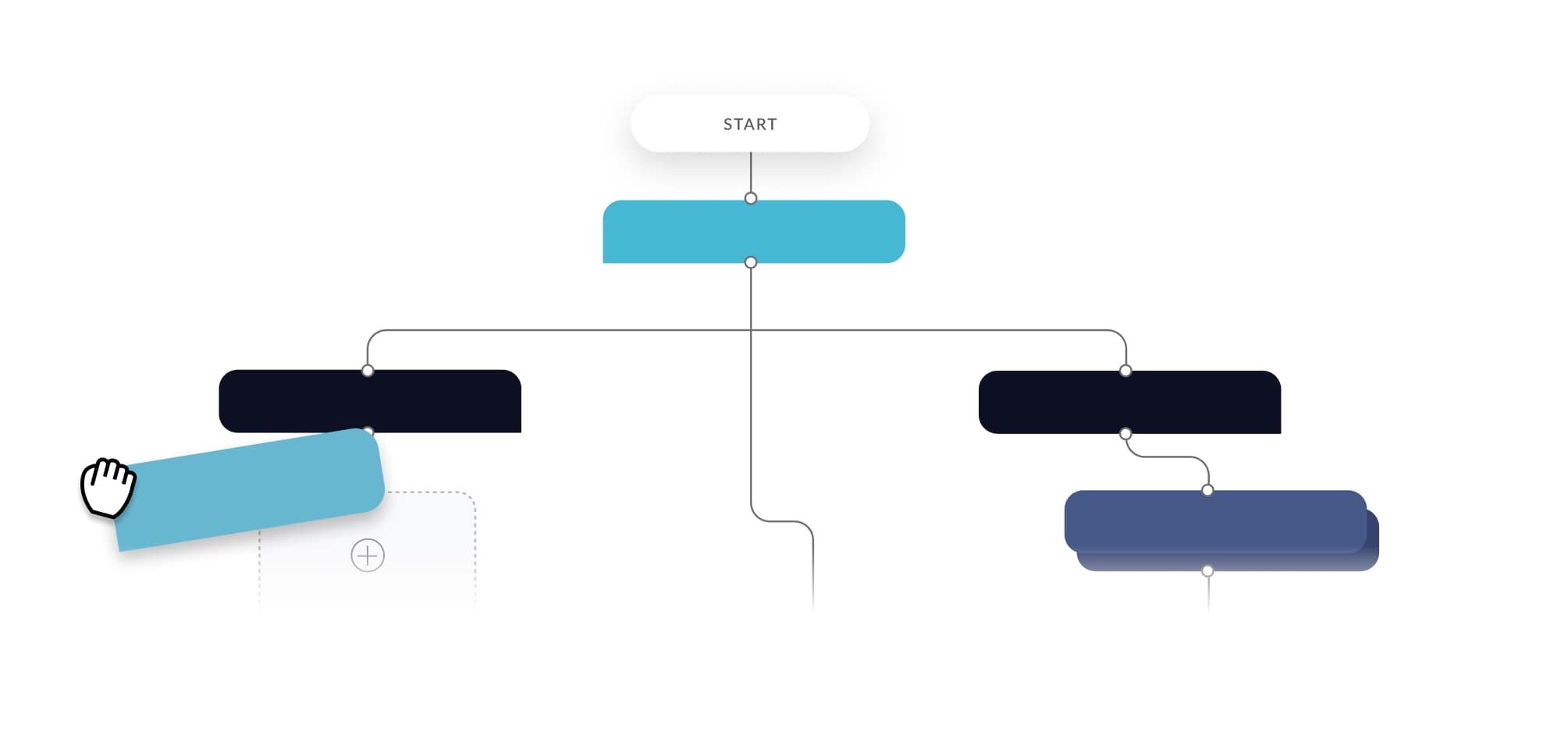
Rule-based voicebots were the first approach in conversational AI. Their functionality is based on a clearly defined if-then logic that follows a strict dialog tree. The bot is programmed to respond to specific keywords or phrases from the caller and play out predefined answers. You could think of it as a digital, automated IVR menu that processes voice input instead of keystrokes.
Advantages of rule-based voicebots:
Rule-based voicebots are extremely reliable and consistent in standardized processes that require a high level of security, such as authentication processes or payment processing. In addition, st is relatively intuitive to implement and maintain, as the responses follow a precisely predefined path.
Disadvantages of rule-based voicebots:
If a customer deviates from the predefined path, the bot quickly reaches its limits. These limitations can quickly lead to frustration among users, as there is a lack of flexibility and natural language processing.
Autonomous AI voicebots for complex interactions
This contrasts with the latest generation of autonomous voicebots, which have heralded a paradigm shift in customer communication through the use of artificial intelligence, in particular natural language processing and large language models.
In contrast to their rule-based counterparts, these AI bots are not limited to a strict dialog tree but react flexibly to the caller's requests.

Advantages of autonomous voicebots:
They understand the customer's intention in free sentences and generate individual answers based on the context. As the bot independently decides which steps to take in order to achieve a goal, complex topics such as consultations or support discussions can be taken on. The AI bots receive instructions in the form of prompts in natural language.
Disadvantages of autonomous voicebots:
Autonomous bots are not always 100% predictable, as the LLM models are based on probabilities. If user statements on sensitive topics such as data protection or payments are misinterpreted, this can lead to major problems.
Hybrid approaches: The best of both worlds for your voicebots
In many cases, the strategically wisest decision is not to choose between purely rule-based or purely autonomous systems, but to opt for a hybrid voicebot model. This approach combines the stability and reliability of rule-based voicebots for standardized, repetitive processes with the flexibility and intelligence of autonomous voicebots for complex, hands-free interactions.
The result is a solution that combines the best of both worlds: speed and cost efficiency for routine tasks and high solution quality for complex issues.

In the BOTfriends X platform, we implement this approach by combining static dialogues and agentic dialogues. While the conversation in static dialogs follows a clearly defined process, in agentic dialogs the process is simply described in natural language. The AI understands the goal and develops a plan based on the description and makes decisions independently.
You can find more information on how this hybrid system is implemented in our platform in our white paper on modern AI agent building.

Such a hybrid system could, for example, first guide the caller through secure authentication using a rule-based process, which is a clearly defined, critical process where accuracy is the top priority. Once this step is completed, or if the customer makes an unstructured request, the caller is seamlessly transferred to an agent-based dialog.
For queries that even the best AI cannot resolve conclusively, the human handover is essential. Here, the customer is seamlessly handed over to a human agent who immediately has access to the entire interaction history with the bot, which significantly improves efficiency and the customer experience.
Through the strategic voicebot implementation of a hybrid model, companies can achieve almost complete automation of their routine requests while maintaining the quality of the more complex service cases.
BOTfriends: Your partner for strategic voicebot implementation
Deciding on the right type of voicebot is a complex strategic task that requires in-depth specialist knowledge. As an experienced partner, BOTfriends supports you throughout the entire voicebot implementation process, from the initial analysis to the go-live and beyond.
- We offer an omnichannel AI agent platform
- Combine rule-based logic and state-of-the-art agentic AI
- Our solution is 100% GDPR-compliant and operated in EU data centers
- We enable a quick start with functional bots in just a few weeks
- Rely on our expert knowledge for strategic implementations