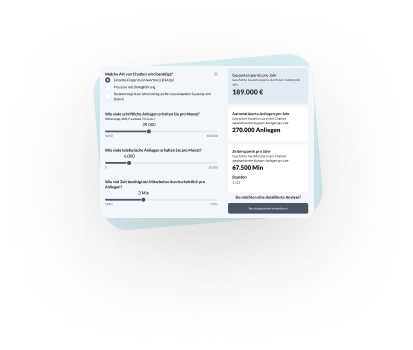
 AI Agent ROI Calculator
 Free training: Chatbot crash course
 Whitepaper: The acceptance of chatbots
For a long-term conversational AI strategy, it is essential to build up internal competencies that prepare the company for the challenges of the future. For the successful introduction and maintenance of virtual assistants, not only classic roles are needed, but also those with new qualifications. Learn in this blog post which roles are needed and which tasks they have to face.
New skills are needed
To successfully run virtual assistants, a team with dedicated roles and responsibilities must be formed. As in other technology projects, typical roles such as a product owner, developers, IT architects or data security specialists are needed.
However, there are some specific roles when it comes to conversational AI projects. For example, a team member who specializes in user experience. This is because designing conversations requires various skills, such as writing text messages or the ability to distinguish between voice -based and chat-based conversations. The new role of“Conversational Designer”will gain relevance as Conversational AI becomes more widespread in companies. Generally, candidates who already have experience in UX design or who have designed other user-friendly technologies, such as websites or applications, are well-suited for this role. Employees specializing in human-computer interaction or conversion optimization are also suitable. Although chatbotsand voicebots differ greatly from other technologies in terms of design skills, these skills can be quickly acquired with a good sense of what constitutes a positive user experience.
Other special roles include human agents and content or intent managers, who contribute immensely to the success of virtual assistants.
Human agents are responsible for ensuring a good user experience while users interact with virtual assistants. Whenever they are unable to help users, a human agent:in takes over the conversation. These agents are trained customer:internal service employees who are assigned new competencies by taking over conversations from bots and monitoring them. Depending on the use case, they can also be employees from other departments such as HR or Marketing. In general, these candidates should be able to help with all inquiries. Either by answering the question or by forwarding it to the right contact person.
Content or intent managers are responsible for the short-term improvement of your assistants. They are specialists from the departments who have all the expertise and knowledge you want to provide to users via chatbot or voice assistant. Their job is to check if the chatbot has responded correctly to user:inside requests and optimize its performance. You will assess what content needs to be added and how the messages should be worded.
Overview of the roles of the Conversational AI Team

- Organizes the initial workshop for the development of the use case
- Defines the exact functions, features and requirements of the bot
- Monitors the progress of the project
- Takes care of communication and coordination with all stakeholders
- Defines KPIs and goals
- Coordinates administration, KPI tracking, country roll-outs, further developments
- Evaluates feedback
- Participates in the initial workshop for detailed elaboration of the use case and all requirements
- Shapes the conversation together with the Conversational Designers
- Maintains existing contents
- Constantly adds new content
- Uses a training tool to check the answers of the bot
- Design the Conversational Map together with the Intent Managers
- Creates design guidelines for the chatbot tonality
- Performs user testing and examines virtual assistants for their user experience
- Initially develops the conversation and logic of the chatbot
- Creates system integrations to send the data from the bots to internal systems
- Provides the infrastructure (Conversational AI Platform) to develop and operate the chatbot
- Evaluates and defines the technology landscape of Conversational AI tools and services
- Take over the conversations of virtual assistants if they do not yet have knowledge about the request
- Monitor the ongoing conversations with the virtual assistants and proactively intervene in case of negative sentiment scores
Is the central contact point for technical problems
- Defines the general strategy
- Checks the added value of the bots
- Makes the decision and provides the budget
Want to know more about how to best prepare your chatbot or voicebot project?
Then get our whitepaper. In it, we go into the three most common mistakes when implementing Conversational AI projects and explain how you can avoid them.